

A broken catch basin rarely stays a small problem. When the structure that drains your lot starts to sink or crack, water collects in the pavement and the damage spreads outward.
Prompt catch basin repair keeps that water moving and protects the asphalt around it. As a Flushing, MI asphalt maintenance contractor, we see the difference a timely fix makes on commercial lots every season.
Here's what property managers should know about catch basins and the pavement around them.
What a Catch Basin Does for Your Lot
A catch basin is the inlet where rain and snowmelt leave your parking lot. It usually has a grate on top and a sump below that holds sediment and debris before water reaches the storm sewer.
Michigan's notes that basins sit at low points and are spaced to drain surface runoff. That means each basin handles parking lot drainage for a large share of the pavement around it.
Why Catch Basins Break Down
Newer basins are usually precast concrete, while older systems often use brick or concrete block. Over time, erosion wears those blocks and bricks down until the top structure is no longer secure.
Daily traffic adds stress. Cars driving and parking over the grate, plus plow blades striking it, push on the steel frame until the whole top section starts to settle.
Warning Signs to Watch For
After a heavy rain, check each basin for these signs of failure:
- Sunken or settling pavement around the basin
- A grate sitting higher than the surrounding asphalt
- Cracks or holes in or around the structure
- Standing water that lingers after the storm
- Rust, corrosion or a loose grate
What Happens When Repairs Wait
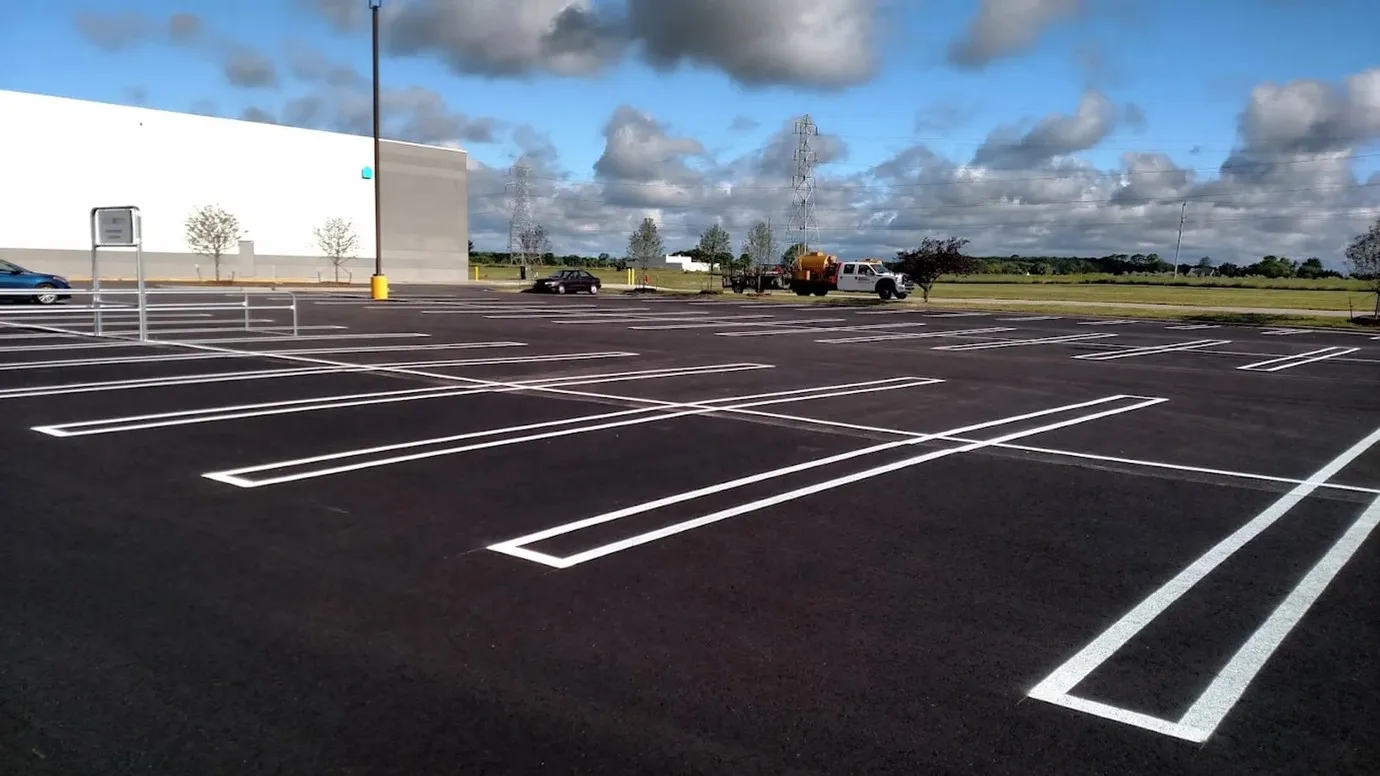
A failing basin lets water sit on and under the pavement. Once it reaches the base layers, the subsurface can deteriorate quickly, and cracks and potholes follow.
That is the same pattern behind when asphalt cracks should be repaired: water gets in, the base weakens and repairs grow larger. Drainage trouble is also one of the signs a lot needs paving, so fixing a sunken catch basin now can delay a much bigger project.
A grate that sits too high or too low is also a liability, since it can trip pedestrians.
How Repair Protects the Pavement
Commercial catch basin repair ranges in size depending on how far the damage has gone. When an older basin is beyond repair, our crews can dig out the area and rebuild it completely.
Either way, the goal is a solid structure and a grate that sits level with the pavement. Water then drains where it should instead of soaking the base.
Keeping Basins Working Between Repairs
Regular catch basin cleaning helps the structure do its job. The EPA's warns that neglected systems collect debris that leads to clogging and flooding.
Add a basin check to the pavement inspections you already schedule once or twice a year. Pairing it with crack sealing and commercial sealcoating keeps water out of the surface, and our asphalt maintenance services cover the rest.
Frequently Asked Questions
How often should a commercial parking lot's catch basins be cleaned?
Twice a year is a common target for commercial lots, though industrial sites may need cleaning as often as quarterly. Michigan's state stormwater guidance cites a study recommending semi-annual cleanouts for commercial land.
Lots with heavy leaf fall or winter sand may fill faster than average. A quick look into the sump after a few storms helps set the right schedule for your property.
What are older catch basins made of?
Older catch basins are often built from brick or concrete block, while newer ones are usually precast concrete with cast iron grates. That difference matters, because brick and block tend to erode and loosen over the years.
Erosion is the main reason Asphalt Management Inc. sees basins collapse, because the top structure loses its support once the blocks deteriorate.
Can snowplows damage a catch basin?
Yes, plow blades that strike a raised grate or frame put heavy stress on the structure. Repeated hits can loosen the steel grate and speed up sinking around the basin.
Fixing a high grate in the fall removes the hazard before the first plow pass, and Asphalt Management Inc. offers parking lot snow and ice management along with catch basin repair.
Does a collapsed catch basin always need to be replaced?
Not always, since repairs range from smaller fixes to a full rebuild. The right approach depends on how much of the brick, block or concrete has deteriorated and how far the pavement around it has settled.
When an older basin is beyond repair, Asphalt Management Inc. can dig out the area and rebuild it, and an inspection shows which approach a basin needs.
How do I know if a catch basin is clogged?
Water that drains slowly or ponds around the grate after a normal rain is the most common clue. You may also see leaves, trash or sediment piled on the grate or near the top of the sump.
Oregon's environmental agency suggests cleaning a basin once sediment fills more than one third of the space below the water line. Debris left too long can wash on through the system.