
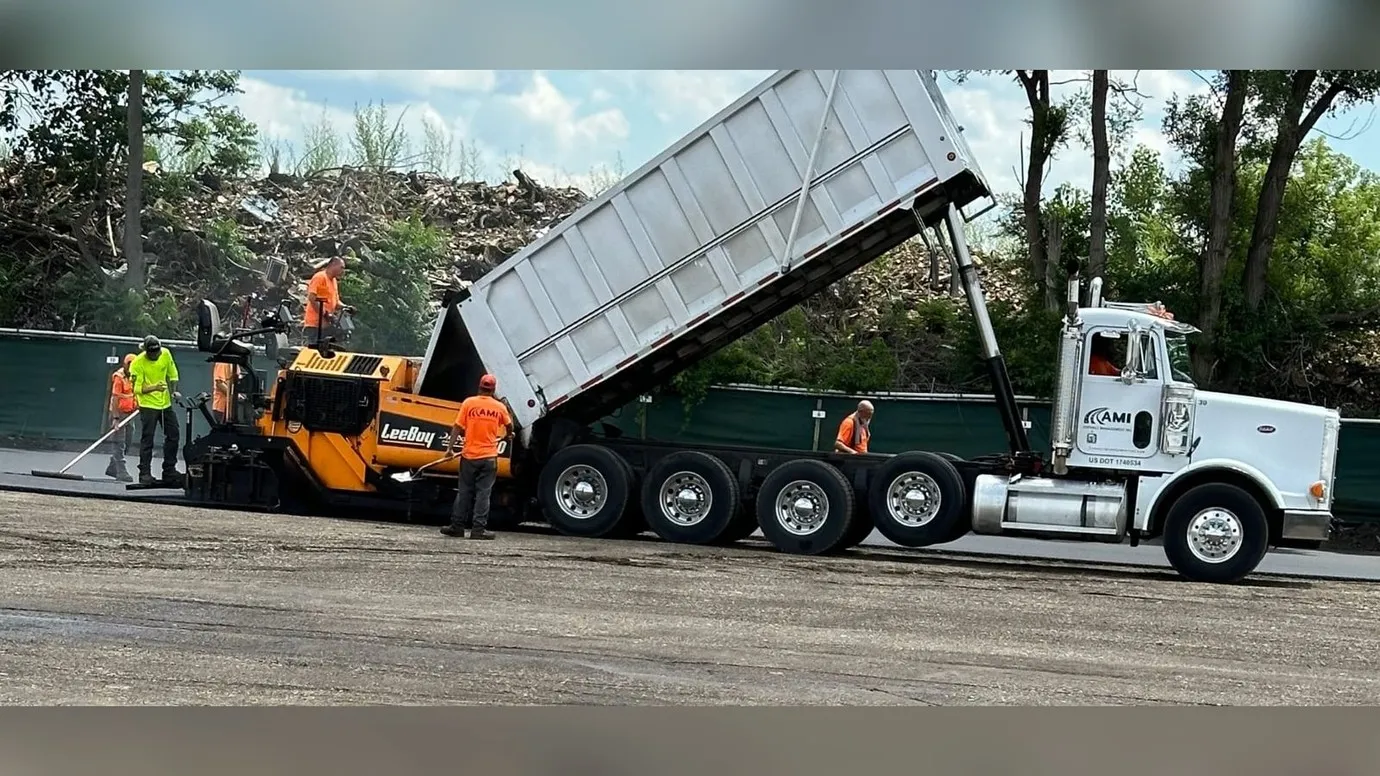
When a parking lot is milled, the worn top layer is ground off and hauled away. That old asphalt rarely ends up as waste, because most of it is crushed, screened and mixed back into new pavement.
Asphalt milling and recycling removes only the damaged surface and keeps a stable base in place. As a Flushing, MI asphalt contractor, we use milling on commercial lots that need more than patching but less than a full tear-out.
Here's what happens to your old pavement, step by step.
What Milling Removes
A milling machine grinds the top layer of asphalt off the lot to a controlled depth. On our commercial jobs, that is usually 1 to 2 inches, which leaves the underlying layers in place.
Milling also takes out ruts, dips and high spots. The goal is a clean, even surface that new asphalt can bond to at the right grade.
Where the Old Asphalt Goes
As the machine cuts, a conveyor loads the ground material into trucks. Once it leaves your lot, that material is called reclaimed asphalt pavement, or RAP.
Federal guidance on explains that most RAP is crushed, screened and stockpiled at central plants. The same guidance notes that the majority of RAP produced is recycled and used again.
How Recycled Asphalt Gets Reused
Most RAP goes back into new hot mix asphalt, where the old stone and binder replace some fresh material. It can also serve as base aggregate under new pavement or as fill.
The volume is large. An industry from the National Asphalt Pavement Association estimated that 96.1 million tons of RAP went into new asphalt mixtures in 2023.
Why Recycling Helps Your Budget
Reusing pavement means less new material has to be produced and trucked in. Federal describes RAP as a cost effective material that also reduces waste.
On your property, commercial asphalt milling takes less labor and causes less disruption than full replacement. You pay to replace only the layer that wore out, and the work can be scheduled in stages to keep parts of the lot open.
What Happens on Your Lot After Milling
Once milling is complete, the surface is cleaned. Our crew then applies an SSI-H tack coat so the new asphalt bonds to the existing pavement.
Fresh asphalt is placed over the milled area to bring it back to the original grade. Rolling compacts it into a smooth, level surface that drains better and removes tripping hazards.
When Milling Is the Right Fix
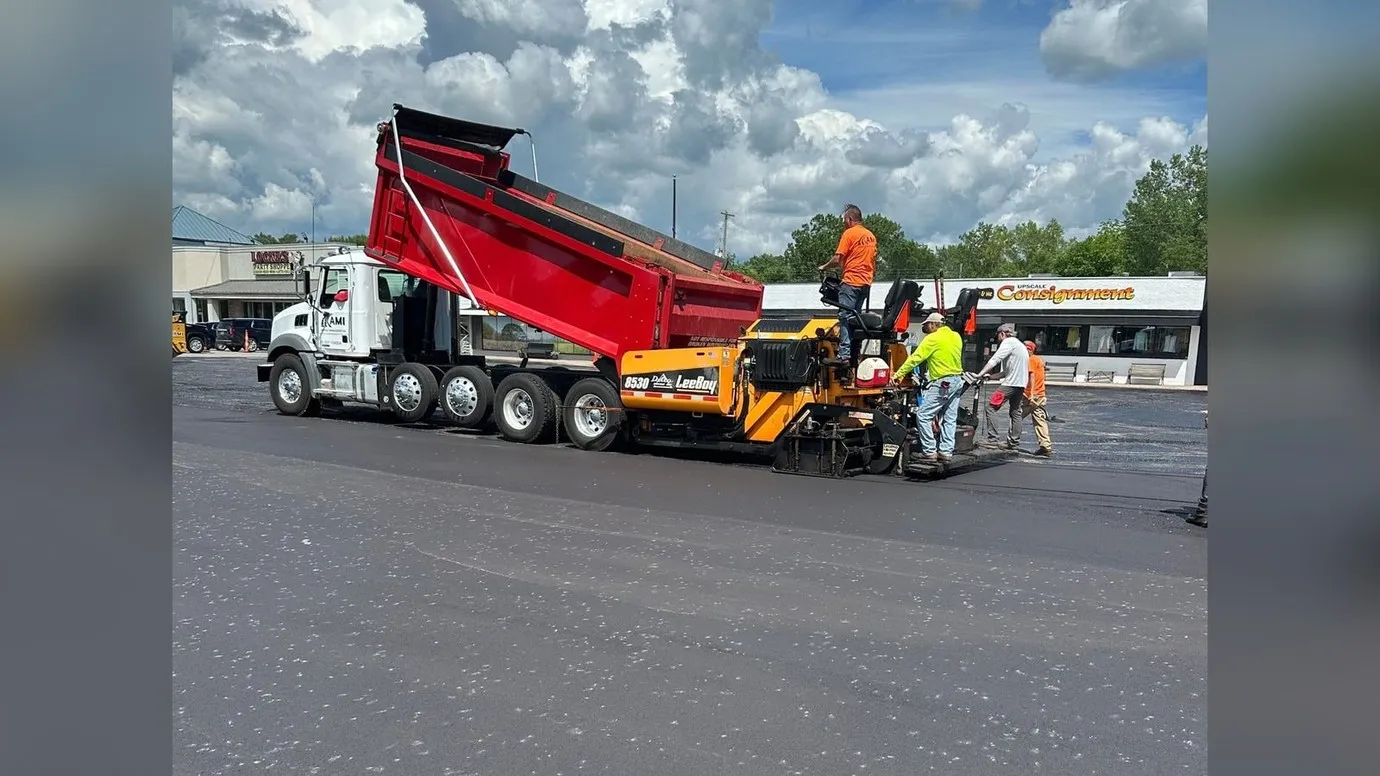
Milling works when the damage sits in the surface and the base is still solid. Widespread surface wear, rutting and uneven grades are common reasons to consider it.
If the base has failed, asphalt replacement may be the better choice. Standing water and heavy cracking are among the signs a lot needs paving, while smaller cracks call for timely crack repair.
Every milling job starts with a site evaluation, so you'll know which option fits before work begins. Milling is one of several asphalt paving and maintenance services we provide.
Frequently Asked Questions
Is recycled asphalt as strong as new asphalt?
Recycled asphalt can perform well in new pavement when it is processed and blended correctly. Plants control how much RAP goes into each mix so the finished pavement suits the job.
Federal research notes that higher RAP content tends to make a mix stiffer, which can raise the risk of low temperature cracking in cold climates. That is why quality control matters for Michigan lots.
Can asphalt millings be used on a gravel driveway or lot?
Millings can be used as a base or surface on gravel areas, but they do not behave like new paved asphalt. They are best treated as an upgrade to stone, not a replacement for paving.
The Federal Highway Administration notes that RAP used as granular base is usually blended with other aggregate, since RAP alone has lower bearing capacity than a blend.
How does Asphalt Management Inc. decide if a lot can be milled?
Every milling job begins with a site evaluation of the pavement and the base beneath it. If the base is stable and the surface layer is the main problem, milling is usually a good fit.
If the evaluation finds base failure, the crew will recommend a different approach, such as saw cut and replace, and you can call (810) 659-5400 to schedule that assessment.
Can milling be done in stages so customers can still park?
Often, yes, because Asphalt Management Inc. can schedule mill and replace work in stages so parts of the lot stay open for customer access while crews finish other sections.
Planning each phase around your busiest hours helps keep traffic moving. A site visit is the best time to map out which areas get done first and how cars will flow around the work.
Why is a tack coat used after milling?
A tack coat is a thin bonding layer that helps new asphalt stick to the milled surface below it. Without a good bond, the new layer can separate from the old pavement over time.
Asphalt Management Inc. applies an SSI-H tack coat after the milled surface is cleaned and before fresh asphalt is placed, so both layers work together as one pavement.